
You Were at Every Game and Missed the Whole Season
Oct 14, 2026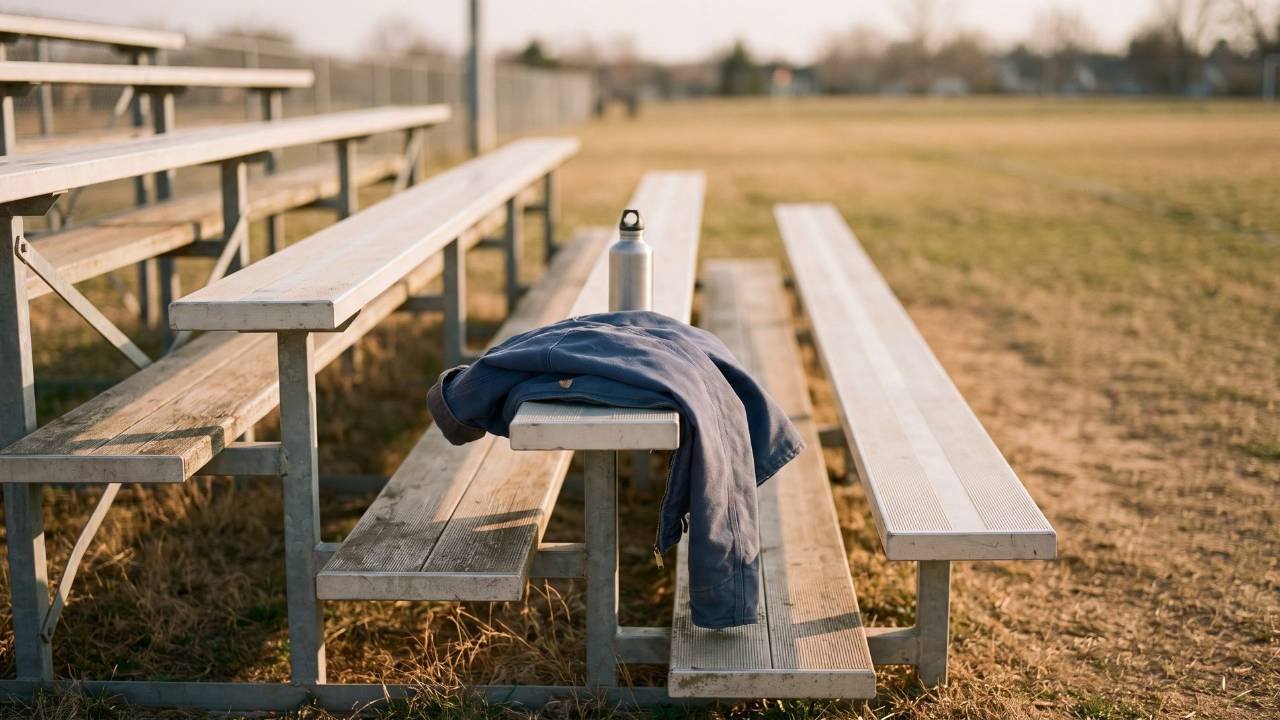
Third row, aluminum bleachers, Saturday morning. You moved two things to be here, and you're a little proud of that.
Somewhere in the second quarter you answered one email. Just one — it took ninety seconds. When you looked up, your daughter was jogging back to the bench with her cheeks flushed, and the parents around you were clapping, so you clapped.
On the drive home you asked if she had fun. She said yeah. That was the conversation.
What that actually is
If anyone audited your family life, you'd pass. You were at every game this season. You're home for dinner most nights. Your name is on the field-trip sign-up sheet. There's a wall of evidence that says family first, and you built it honestly, one rearranged Saturday at a time.
That evidence is exactly what makes the counterfeit hard to see. Always Family First has a look-alike, and the look-alike is attendance — the body in the seat, the name on the list, the calendar block honored. Attendance is real effort. It costs you something. But it can run at full capacity while the actual connection idles, because being in the building and being with your people are two different acts that happen to look identical from across the gym.
You know which one is happening. So do they. Kids are bad at many things, but they are precision instruments for detecting where your attention actually is.
Why the usual fix doesn't take
The standard repair for this feeling is to schedule something bigger. A real vacation. A proper daddy-daughter day. The elaborate Saturday that makes up for the ordinary Tuesdays. And those are good things — but notice what they are. More attendance. Bigger venues, same act. You can't fix a presence problem by upgrading the events, any more than a couple fixes a distant marriage by booking a nicer restaurant to be distant in.
When Moses told Israel how faith was supposed to move from one generation to the next, he didn't point to the big occasions. He said to impress these things on your children "when you sit at home and when you walk along the road, when you lie down and when you get up" (Deuteronomy 6:7). The delivery mechanism for everything that matters in a family is the unscheduled middle — the car ride, the counter while dinner cooks, the ten minutes before lights out. The moments no one can put on a calendar, which is exactly why attendance can't reach them.
This is where Always and Style have to separate, because the counterfeit flattens them together.
Always is the non-negotiable: your people get you, not just your coordinates. That doesn't flex with busy seasons, and it doesn't wait until the project ships.
Style is where the honest news comes in: presence doesn't look the same on everyone, and a good chunk of your guilt may be borrowed from someone else's version of it. Some parents connect face-to-face, long talks, eye contact. Some connect shoulder-to-shoulder — fixing the bike, running the errand, saying almost nothing and somehow saying plenty. If you've been grading yourself against the heart-to-heart model when you're built for the passenger-seat model, you may be more present than you think — or you may be using that as cover. The practice below will tell you which.
The practice
Make re-entry a ritual. The first ten minutes after you walk in the door set the tone for the whole evening, and the phone is the main thief. Park it — physically, in a drawer or on a shelf — until you've found each person in the house and landed with them for a minute. If you're wired for words: land with a real question, not logistics. If you're wired for action: land by joining whatever they're doing — stirring the pot, holding the flashlight — without narrating that you're doing it.
Ask one question you can't predict the answer to. "How was school" is attendance in verbal form; everyone performs their lines and parts. Once a day, trade it for a question you actually don't know the answer to — what they'd change about their team, which friend is funniest right now, what they'd do with a free Saturday. If face-to-face is your lane: ask it at the table and stay in it past the first answer. If side-by-side is your lane: ask it in the car, eyes on the road — some kids only open up when nobody's looking at them.
Give one event your whole attendance. Next game, recital, or practice pickup: nothing in your pockets, nothing in your hands. Watch the way you'd watch if you had to describe the whole thing to someone afterward — and then actually describe it to your kid on the way home, specifics and all. "That pass you made in the third quarter" does more than a hundred "good game, bud"s. If you're competitive by wiring: resist coaching; narrate what you saw, not what you'd fix. If sports aren't your language: the assignment is the same at the concert, the science fair, the sidewalk chalk masterpiece.
Audit the evidence with the people who hold it. Once this week, ask someone in your house: "When do you feel like you've got all of me?" Then don't defend yourself against the answer. If direct questions feel forced in your family: skip the interview and watch instead — notice which moments they seek you out, and which versions of you they've quietly stopped approaching.
The close
Tonight, when you walk in, let the first thing your family gets be you — not the last ninety seconds of your inbox.
Always Show Up As You.
SUBSCRIBE FOR WEEKLY LIFE LESSONS
Practical, faith-grounded lessons on building a life that holds up under pressure. One email a week, short enough to read before your coffee cools.
We hate SPAM. We will never sell your information, for any reason.